If you’ve ever stepped into a greenhouse on a sunny afternoon and felt like you walked into an oven, you already understand the central challenge of greenhouse gardening. Greenhouses are brilliant at trapping heat — that’s exactly what makes them useful in spring and autumn. But that same trapped heat can turn into a serious problem once summer arrives. Get the climate control wrong, and you risk cooking the very plants you’re trying to protect.
After years of managing greenhouses of every size, I’ve learned that good climate control isn’t about fighting the greenhouse effect — it’s about working with it intelligently. Here’s what actually matters.
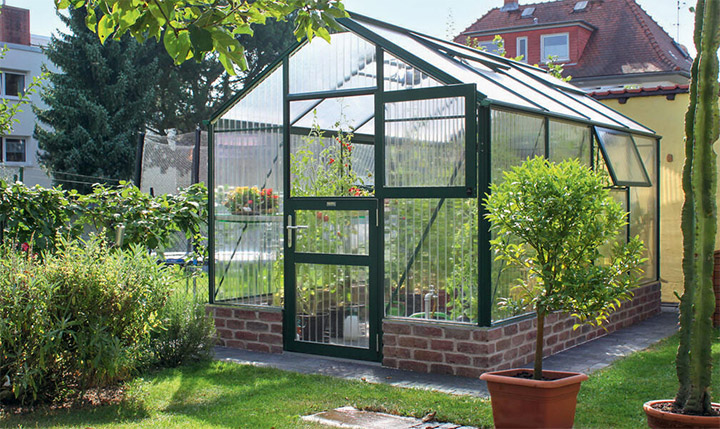
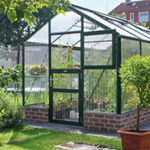
A few windows and a half-open door create a draft: hot air rises and escapes, while cooler air enters through the side windows. A general rule of thumb: at least ten percent of the outer surface area should be operable (able to be opened). Img: Wama
Why Greenhouses Overheat
The physics behind a greenhouse is deceptively simple. Short-wave sunlight passes easily through glass or plastic panels and hits the surfaces inside — soil, benches, plant leaves. Those surfaces absorb the light and re-emit it as long-wave heat radiation. The problem is that this long-wave radiation doesn’t pass back out through the glass nearly as easily as sunlight came in. The heat gets trapped, and the temperature inside climbs well above the outside air.
On a mild spring day, this is a gift. It lets you start seedlings weeks earlier than you could outdoors. But on a hot summer day with the windows shut, temperatures inside a greenhouse can soar past 50°C (122°F). That’s not just uncomfortable — it’s dangerous. Most plants grow best between 20 and 30°C. Push much beyond that, and enzymes and other essential proteins inside plant cells start to break down. Leaves scorch, growth stalls, and in severe cases, plants simply die.
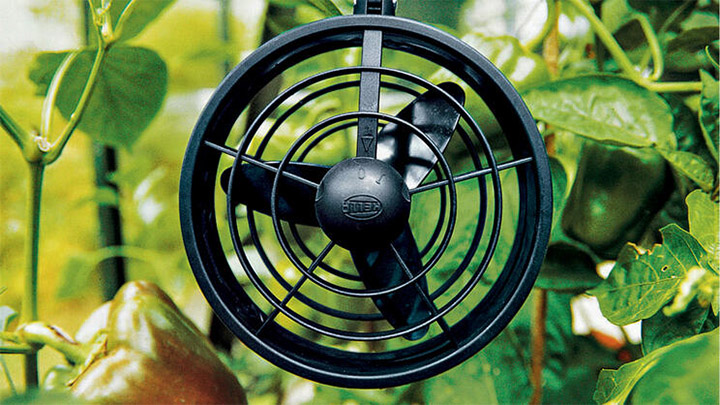
Fans don’t just help cool things down — they also help leaves dry faster, reducing the risk of fungal diseases. Photo: Beckmann
It’s worth knowing, too, that clear glass offers no real protection from sunburn — plant tissue can scorch right through it, just as human skin can burn through a window on a hot day.
Ventilation Is Your First and Best Defense
If there’s one lesson I’d want every greenhouse owner to walk away with, it’s this: airflow matters more than almost anything else. A lot of basic, budget greenhouse kits come with barely any doors or vents, which is a real design flaw. Before you buy one, check how many ventilation points it actually has.
Ideally, you want vents positioned at different heights — some near the roof, some lower down on the walls. Hot air rises and collects at the top, so a roof vent lets it escape, while lower vents pull in cooler air from outside. Together, they create a natural convection current that keeps air moving instead of stagnating.
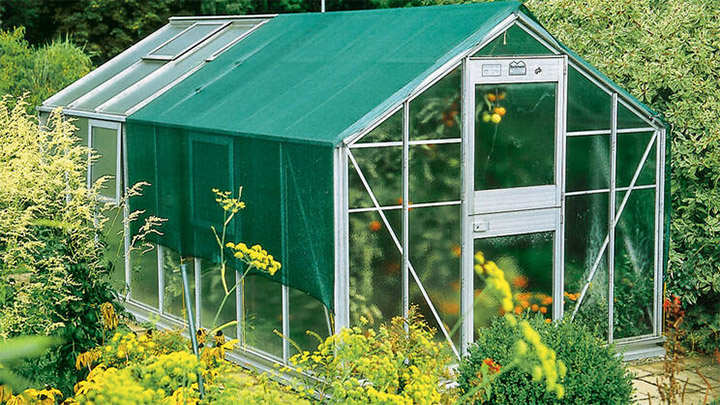
Exterior shading is as simple as stretching a shade net over the greenhouse and securing it in place. This method blocks sunlight more effectively than shading installed on the inside. Photo: Beckmann
Shading: The Second Pillar of Climate Control
Ventilation alone usually isn’t enough once temperatures spike, which is where shading comes in. The simplest and most cost-effective option is shade netting or matting stretched over the outside of the structure — reed mats work well and are inexpensive. The key word here is “outside”: shading applied on the exterior blocks heat before it ever reaches the glass, which is far more effective than trying to manage it once it’s already inside.
Interior shade nets are easier to open and close on demand, which is handy, but they can get in the way if your plants have grown tall enough to brush against the roof. Some greenhouse owners — particularly those using their greenhouse as a garden room or seating area — prefer clear or frosted glass roofing for aesthetic reasons. Just know that this comes at a cost: without shading, sunlight isn’t diffused, and leaves can scorch more easily than under textured or plastic panels. If you go this route, interior curtains or blinds become essential rather than optional.
Whitewashing: An Old Trick That Still Works
One of the oldest tricks in the book is whitewashing the glass — literally painting it with a diluted chalk or lime mixture. A rough ratio of five parts chalk to six parts water, brushed on with a wide brush, creates a translucent white film that reflects a portion of incoming sunlight. Rain gradually washes it away over the season, which is actually convenient — it fades naturally rather than requiring removal.
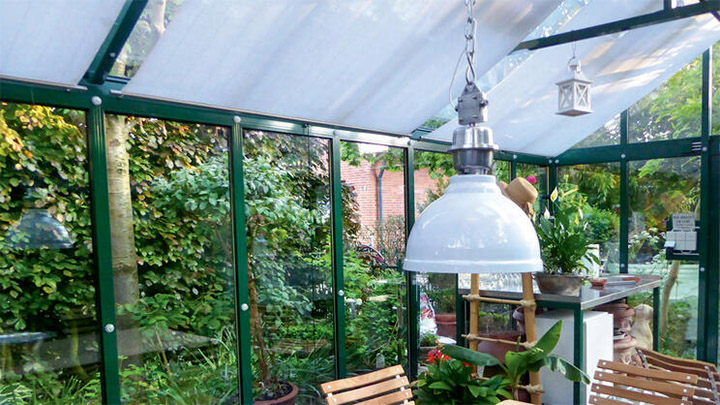
If the greenhouse doubles as a covered seating area, much like a plant-filled garden room, roller blinds installed on the inside make a good shading option. Photo: Hoklartherm
Applying it to the inside of the greenhouse tends to make it more durable, but keep in mind you may need to scrub it off before winter if you plan to overwinter potted plants inside. Some gardeners substitute a flour-and-water paste, though it’s stickier and harder to remove thanks to the gluten content. One caution: this technique works well on glass roofs, but it’s risky on twin-wall polycarbonate panels, which scratch easily — brushing chalk onto them can leave permanent marks.
Ask an Expert: When Does Heat Become Dangerous?
I recently spoke with Thomas Beckmann, a greenhouse specialist based in Wangen who runs his own greenhouse company, about how growers should think about summer heat management.
At what temperature does heat actually become dangerous for plants?
Beckmann explains that plants rely on evaporative cooling — releasing water vapor through their leaves — to avoid overheating and cellular damage. As temperatures climb, plants need to evaporate increasing amounts of water just to keep pace. But there’s a physical ceiling to this strategy: each water molecule absorbs less heat as it evaporates at higher temperatures, making the cooling process less efficient exactly when it’s needed most. Somewhere between 30 and 33°C, this becomes genuinely risky, potentially causing leaf discoloration, weak and leggy shoots, or even plant death.
What’s the single best response to a heatwave?
According to Beckmann, thorough ventilation comes first — every window and door should be opened. On hot summer nights, it’s worth leaving vents cracked open even after dark rather than sealing the greenhouse shut. Exterior shade nets or mats are the next line of defense, and a well-installed system can cut incoming solar radiation by 50 to 60 percent.
Do fans actually help?
Yes, and more than most people expect. Even gentle air movement increases evaporation from leaf surfaces and lowers leaf-surface temperature. Beckmann recommends positioning fans about one to two meters from a vent near the roof peak, since that’s typically where heat concentrates most. This setup draws cooler air in and drives active air exchange rather than just stirring hot air around in place.
For a basic 10-square-meter greenhouse, how much ventilation is actually enough?
Beckmann’s rule of thumb: four roof vents plus one door will usually do the job. A split (stable-style) door is ideal, since it gives you finer control over airflow — you can crack the top half open without fully exposing the interior. A second door or window is a nice upgrade but not essential. If your budget allows, thermostat-controlled vent openers are well worth the investment; even the inexpensive mechanical versions, which need no electronics at all, tend to be remarkably reliable.
The Bottom Line
Managing greenhouse heat isn’t about any single fix — it’s about layering strategies. Start with strong ventilation at multiple heights, add exterior shading before the summer sun peaks, and consider a fan to keep air actively circulating rather than sitting still. Do that, and the same greenhouse effect that threatens to cook your plants in July becomes the tool that gave your seedlings a head start back in March.


Để lại một bình luận